





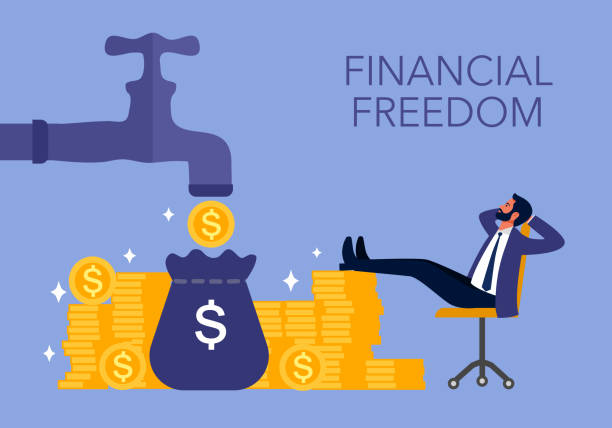
Financial Freedom:
Having enough cash on hand, investments, and savings to support the lifestyle you choose for your family and yourself is known as financial freedom. It entails building a nest egg that will free you from the pressure to meet annual income requirements, allowing you to pursue your desired professional path or retire.
The following actions can help you reach financial freedom:
- Make definite goals: Describe your definition of financial freedom. Establish financial goals that are SMART—specific, measurable, attainable, relevant, and time-bound.
Make a budget by keeping track of your earnings and outlays to see where your money is going and where you may make savings.
Create an Emergency Fund by setting aside three to six months’ worth of living costs in an account that is easily accessible.
- Pay Off Debt: To free up more cash for savings and investing, concentrate on paying off high-interest debt first, such as credit card balances.
- Invest Wisely: To increase your wealth over time, put money into a diverse portfolio of stocks, bonds, and real estate.
- Save for Retirement: To benefit from tax advantages and compound interest, make contributions to retirement accounts, such as an IRA or 401(k).
- Boost Your Income: Consider strategies to increase your income, such as learning new skills, requesting a pay rise, or launching a side venture.Live Below Your Means: Even if your salary rises, you can prevent lifestyle inflation by leading a modest lifestyle.
- Continue Your Education: In order to make wise decisions, keep up to date on economic trends, personal finance, and investment techniques.
- Seek Professional Advice: To develop a thorough financial strategy customized to your objectives, think about collaborating with a financial counselor. It takes a number of actions and a dedication to make prudent financial decisions over time to reach financial freedom.
Here is a thorough itinerary to assist you on your travels:
- Establish definite financial objectives:
Short-term objectives: vacation savings, debt repayment, emergency reserve.
Mid-term objectives: Paying for children’s schooling and a down payment on a home.
Long-term objectives: Financial independence and retirement funds.
- Establish and Follow a Budget:
Monitor all of your earnings and outlays.
Use applications or tools for budgeting to assist with financial management.
Set aside a certain percentage of your salary for investments and savings.
- Establish an Emergency Reserve:
At least three to six months’ worth of living expenses should be saved.
For convenient access, keep this money in a high-yield savings account.
4. Pay Off Debt:
Prioritize paying off high-interest debt (credit card debt, for example).
Apply strategies such as the debt avalanche, which pays off high-interest loans first, or the debt snowball, which pays off the lowest obligations first.
Refrain from taking on more debt.
- Make wise investments and save
Make contributions to retirement funds such as an IRA or 401(k).
To reduce risk, diversify the investments in your portfolio.
Think about inexpensive ETFs and index funds.
- Raise Your Salary Seek possibilities to grow within your existing position.
Acquire new, marketable talents.
Think about doing freelance work or side gigs to augment your income.
- Make Do With Less Than You Can
Limit your living expenses as your income increases to prevent lifestyle inflation.
Pay more attention to necessities than wants.
Spend money carefully.
Others thorough itinerary to assist you on your travels:
- Keep Up Your Own Education
Study investment and personal finance books and publications.
Participate in webinars or workshops on financial planning.
Pay attention to credible finance podcasts and blogs.
- Get Expert Counsel
Seek guidance from a financial expert for customized planning.
To maximize your tax plan, think about working with a tax professional.
If you need help organizing your estate, get legal counsel.
- Evaluate and Modify Your Plan Frequently
Track your advancement toward your financial objectives.As your circumstances change, make adjustments to your investment strategy and budget.
Remain flexible in response to market shifts and fresh investment prospects.
Extra Advice Of Financial Freedom:
Automate Your Savings: To guarantee regular contributions to your investment and savings accounts, set up automatic payments.
Keep an eye on your credit score in order to gain access to greater financial prospects and reduced loan interest rates.
Insurance Protection: To safeguard your possessions likewise make sure you have enough life, health, and property insurance.
It takes time likewise planning, discipline, and a dedication to making wise financial decisions to reach financial freedom. Begin with baby steps and advance.
See More Related News:




More Stories
NEPSE surges past 2,700 with double-digit rise on Wednesday
Bitcoin tops record $80,000 as Trump nears clear of US Congress
What is Financial Literature?